
FREE Shipping On All Orders Over $150
SHIPS WITHIN 24 HOURS • DISCREET U.S. FULFILLMENT
High-purity COA verified research peptides including Retatrutide, Tirzepatide, BPC-157, TB-500, and MOTS-C.
Built and operated by a U.S. military veteran, committed to precision, discipline, and quality.

Elite Research Labs supplies COA verified research peptides including BPC-157, TB-500, Tirzepatide, Retatrutide, and other laboratory
investigation compounds.




Elite Research Labs is a trusted supplier of COA verified research peptides manufactured for laboratory investigation and scientific study. Our catalog includes metabolic research peptides, growth hormone secretagogues, and recovery peptides such as BPC-157 and TB-500, along with advanced compounds frequently examined in peptide signaling research. Researchers studying cellular regulation and metabolic pathways often investigate compounds such as Retatrutide, Tirzepatide, and MOTS-C in controlled laboratory environments. Every compound we supply is produced to support research integrity and is accompanied by independent Certificate of Analysis verification. All products are intended strictly for laboratory research use only and are not approved for human consumption.
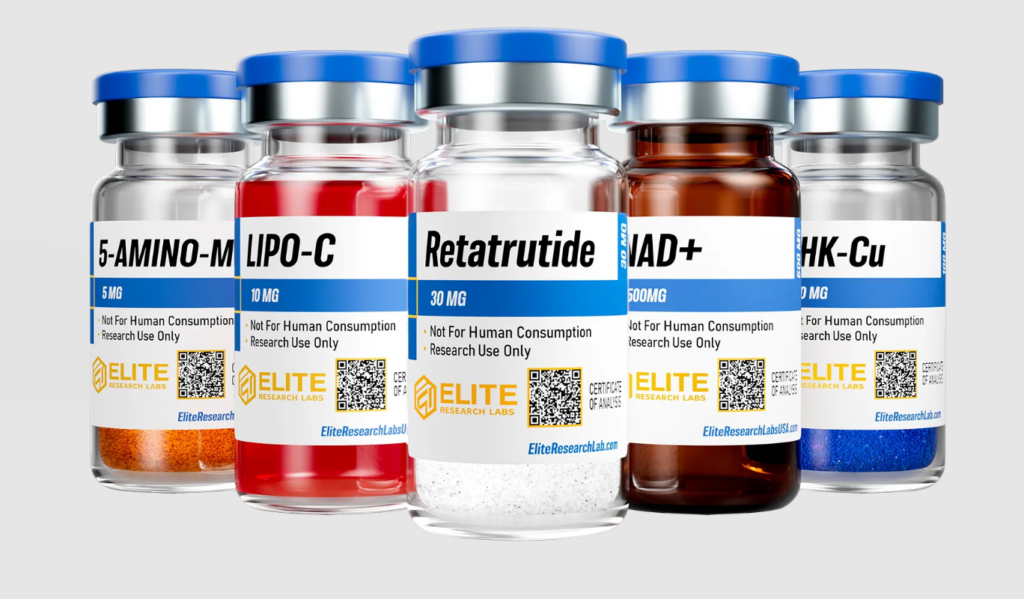
Trusted supplier of COA-verified research peptides for scientific and laboratory investigation.


Yes. Elite Research Labs provides independent laboratory Certificates of Analysis (COAs) for applicable research peptide products to support identity and purity verification.
No. All products sold by Elite Research Labs are intended for laboratory and research use only and are not for human or animal consumption.
COAs can be accessed through our Lab Results / COAs page and matched to your product’s batch number for verification.
We offer a selection of research-use-only peptides, including compounds such as BPC-157 and TB-500, supported by batch-level documentation.
Explore educational resources for research purposes
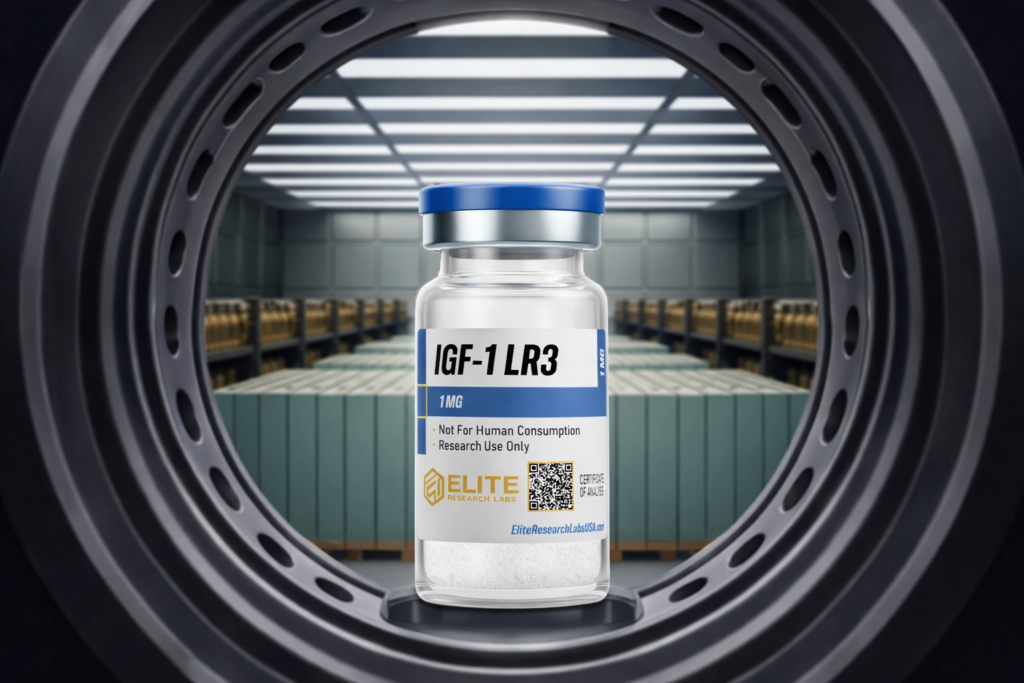
IGF-1 LR3 is a widely studied research peptide known for its extended activity, improved stability, and strong interaction with cellular growth pathways. Understanding its structure, mechanism, and handling is essential for accurate and reproducible research outcomes. Introduction to IGF-1 LR3 in Research IGF-1 LR3 is one of the most widely discussed compounds in peptide research due to its extended activity and strong interaction with cellular growth pathways. In controlled laboratory settings, it has been studied for its role in cell signaling, tissue development, and metabolic processes. For researchers, understanding IGF-1 LR3 helps improve experimental accuracy and ensures better interpretation of results. For researchers evaluating peptide quality, stability, and biological interaction, understanding IGF-1 LR3 goes far beyond a simple definition. This guide breaks down the structure, mechanism, and research relevance of IGF-1 LR3—along with what to look for when sourcing high-purity compounds. Explore high-purity research peptides What Is IGF-1 LR3? IGF-1 LR3 (Insulin-Like Growth Factor-1 Long R3) is a modified version of IGF-1 designed for increased stability and extended activity in research environments. This modification allows researchers to study prolonged biological activity without rapid peptide breakdown. Compared to standard IGF-1: It contains an additional 13 amino acids It has a substitution at the third position (arginine instead of glutamic acid) It exhibits reduced binding to IGF binding proteins (IGFBPs) These structural changes enhance bioavailability and extend the peptide’s functional half-life. Mechanism of Action IGF-1 LR3 interacts with the IGF-1 receptor (IGF-1R), activating intracellular signaling pathways involved in: Cellular growth and proliferation Protein synthesis Nutrient uptake Tissue development These pathways are essential for studying growth-related cellular responses in controlled environments. Because of its reduced affinity for binding proteins, IGF-1 LR3 remains more bioavailable in controlled environments compared to native IGF-1. Higher bioavailability allows for more consistent and measurable research outcomes. Why IGF-1 LR3 Is Used in Research In laboratory settings, IGF-1 LR3 is commonly studied for: Cell growth signaling pathways Muscle tissue models Metabolic regulation Regenerative research environments Its extended activity makes it suitable for long-duration experiments and advanced research studies. Read related peptide research guides (Tesamorelin / Ipamorelin) Stability and Half-Life of IGF-1 LR3 One of the defining characteristics of IGF-1 LR3 is its extended half-life, which can last significantly longer than native IGF-1 under controlled conditions. Extended half-life reduces the need for frequent reapplication in experimental setups. However, like all peptides, stability depends heavily on: Proper storage conditions Temperature control Reconstitution practices Proper stability management ensures accurate and repeatable research results. Storage and Handling Considerations IGF-1 LR3 is typically supplied in lyophilized (freeze-dried) form to preserve structural integrity. Lyophilization helps maintain peptide stability during storage and transportation. Key considerations in research environments include: Storage at low temperatures before reconstitution Avoiding repeated freeze-thaw cycles Using proper sterile technique during handling Correct handling reduces degradation risks and maintains peptide effectiveness. Read: Understanding peptide storage and handling guide COA Verification and Quality Control When working with IGF-1 LR3, verifying purity and composition is critical. Researchers should always review: High-Performance Liquid Chromatography (HPLC) data Mass spectrometry confirmation Batch consistency These verification methods ensure the peptide meets research-grade quality standards. Check COA reports and verification details COA verification helps researchers confirm purity, identity, and reliability of peptide batches. IGF-1 LR3 vs Other Growth-Related Peptides IGF-1 LR3 is often evaluated alongside other peptides involved in growth signaling. Key differences: IGF-1 LR3 ? Direct receptor activation, extended activity Ipamorelin ? Stimulates growth hormone release Tesamorelin ? Targets GH secretion pathways Each peptide has a different role, making them suitable for specific research objectives. Read comparison: CJC-1295 vs Ipamorelin Frequently Asked Questions (FAQ) What is IGF-1 LR3 used for in research? IGF-1 LR3 is used to study cell growth, metabolism, and tissue development in laboratory environments. Why is IGF-1 LR3 more stable than IGF-1? Structural modifications increase its half-life and reduce binding to proteins. How should IGF-1 LR3 be stored? It should be stored at low temperatures and handled carefully to maintain stability. Final Thoughts IGF-1 LR3 remains a significant compound in peptide research due to its enhanced stability, extended activity, and strong interaction with cellular growth pathways. Understanding its structure, storage, and sourcing helps researchers achieve reliable and reproducible results. For researchers, the key factors are not just understanding what IGF-1 LR3 is—but ensuring: Proper storage Verified purity Consistent sourcing Explore research-grade IGF-1 LR3 Using high-quality peptides improves research accuracy and reduces experimental errors.

Research peptides can degrade over time, affecting their stability, purity, and overall research reliability. Understanding peptide degradation helps researchers maintain accurate, reproducible, and consistent experimental results. Introduction A common question among researchers is whether research peptides can go bad over time. Understanding peptide stability and degradation is essential for maintaining reliable experimental results. Even high-quality peptides can degrade if not stored or handled correctly. Knowing how and why peptides degrade allows researchers to take preventive steps and protect their experimental data. Explore our research-grade peptides Can Research Peptides Go Bad? Yes, research peptides can degrade over time, especially when exposed to improper storage conditions. Factors such as temperature, moisture, light, and handling can all impact peptide stability. Degradation can lead to reduced peptide effectiveness and unreliable research outcomes. For a deeper understanding of how long peptides remain usable, researchers often explore peptide shelf-life considerations. Learn more about peptide storage and stability Common Signs of Peptide Degradation Researchers should look for several indicators that peptides may have degraded: Changes in appearance (cloudiness or discoloration) Reduced effectiveness in experimental results Unexpected variability in data Additional signs may include precipitation, loss of solubility, or inconsistent experimental performance. These signs may indicate that peptide integrity has been compromised. Identifying these early warning signs helps prevent inaccurate or misleading research results. What Causes Peptides to Go Bad Several factors contribute to peptide degradation: Improper Storage Failure to follow proper storage protocols can accelerate degradation. Incorrect storage conditions can significantly reduce peptide shelf life and stability. Temperature Fluctuations Inconsistent temperatures can affect peptide stability. Maintaining stable low temperatures helps preserve peptide structure and functionality. Repeated Freeze-Thaw Cycles This can break down peptide structure over time. Repeated freeze-thaw cycles can cause molecular damage and reduce peptide effectiveness. Exposure to Moisture or Contaminants Improper handling increases risk of degradation. Moisture and contaminants can trigger chemical reactions that degrade peptides. How to Prevent Peptide Degradation To maintain peptide integrity: Store peptides under recommended conditions Minimize exposure to environmental factors Follow proper handling procedures Using airtight containers, desiccants, and controlled environments can significantly reduce degradation risks. Researchers working with prepared solutions should also understand proper reconstitution practices. Read our guide on peptide handling and storage H2: Importance of Peptide Quality and Testing High-quality peptides from trusted suppliers are less likely to degrade quickly and provide more consistent research results. Quality-controlled manufacturing and proper testing play a key role in maintaining peptide stability. Reputable suppliers provide: Verified purity levels Batch-specific documentation Transparent testing methods View COA reports and batch verification details Access to COA data helps researchers validate peptide quality before use. Frequently Asked Questions (FAQ) Do research peptides expire? Yes, peptides can degrade over time depending on storage conditions and handling practices. How can I tell if a peptide has gone bad? Signs include discoloration, reduced effectiveness, and inconsistent experimental results. How can peptide degradation be prevented? Proper storage, minimal exposure to moisture and heat, and correct handling techniques help maintain stability. Final Thoughts So, can research peptides go bad? Yes—but with proper storage and handling, degradation can be minimized. Understanding degradation factors allows researchers to improve accuracy and reduce experimental errors. By understanding the signs of degradation and the factors that contribute to it, researchers can ensure more reliable and consistent experimental outcomes. Explore research-grade peptides Choosing high-quality peptides and following best practices ensures better research performance and reproducibility. At Elite Research Labs, all peptides are intended strictly for laboratory and research use only.

Research peptide storage directly impacts stability, purity, and experimental accuracy. Proper refrigeration and handling practices help prevent degradation and ensure reliable research outcomes. Introduction to Peptide Storage Requirements One of the most common questions researchers ask is whether research peptides need refrigeration to maintain stability and integrity. Proper storage conditions are critical for ensuring that research peptides perform consistently in laboratory environments. Understanding proper storage methods helps researchers maintain peptide quality, reduce variability, and improve reproducibility in experiments. At Elite Research Labs, peptides are handled with strict quality and storage standards to support research accuracy. Explore our research-grade peptides Do Research Peptides Need Refrigeration? In many cases, research peptides do benefit from refrigeration, particularly after they have been reconstituted or exposed to environmental conditions. Temperature plays a key role in peptide stability, and improper storage can lead to degradation or reduced effectiveness in research settings. Refrigeration slows down chemical degradation processes and helps preserve peptide structure over time. Learn more about peptide storage best practices Lyophilized vs Reconstituted Peptides The need for refrigeration depends on the form of the peptide. Lyophilized Peptides Typically more stable Can often be stored at cooler room temperatures short-term Benefit from refrigeration or freezing for long-term storage Lyophilized peptides have reduced moisture content, which improves their stability and shelf life. Reconstituted Peptides Much more sensitive Should generally be refrigerated Require careful handling to maintain stability Once reconstituted, peptides become more vulnerable to degradation and must be stored under controlled conditions. Researchers working with reconstituted peptides often follow structured preparation and handling protocols to maintain consistency. Why Temperature Matters in Peptide Stability Peptides are sensitive to environmental conditions, and temperature fluctuations can impact their structure. Improper storage conditions may lead to: Degradation of peptide chains Reduced purity Inconsistent experimental results Maintaining stable temperatures helps protect peptide integrity and ensures reliable experimental performance. Read more about peptide stability in research Short-Term vs Long-Term Storage Refrigeration needs may vary depending on storage duration. Short-Term Storage Refrigeration is typically sufficient Helps maintain stability during active use Short-term refrigeration helps preserve peptide activity during ongoing experiments. Long-Term Storage Freezing is often recommended Avoid repeated freeze-thaw cycles Freezing peptides at stable temperatures extends shelf life and minimizes degradation risks. These practices help preserve peptide integrity over time. Explore peptide shelf-life and stability guidelines Best Practices for Refrigerating Peptides When refrigerating research peptides: Keep containers sealed to prevent moisture exposure Maintain consistent temperature conditions Avoid unnecessary handling Following standardized storage practices reduces contamination risks and improves consistency across experiments. Common Storage Mistakes to Avoid This section is newly added to improve SEO coverage and user intent targeting. Frequent temperature fluctuations Leaving peptides exposed to air or moisture Improper sealing of containers Repeated freeze-thaw cycles Avoiding these mistakes helps maintain peptide quality and prevents unnecessary experimental errors. Impact of Storage on Research Outcomes This section is newly added to align with client’s conversion + authority goal. Improper storage can directly affect research results and data accuracy. Poor storage conditions may lead to: Irreproducible results Data inconsistency Increased experimental costs Proper storage ensures reliable, repeatable, and scientifically valid outcomes Frequently Asked Questions (FAQ) Do all research peptides need refrigeration? Not all peptides require refrigeration, but most benefit from it, especially after reconstitution. What happens if peptides are not refrigerated? They may degrade, lose purity, and produce unreliable experimental results. Can peptides be stored at room temperature? Lyophilized peptides may be stored short-term at cool temperatures, but refrigeration is recommended for stability. Conclusion So, do research peptides need refrigeration? In most cases, yes—especially after reconstitution or when long-term storage is required. Proper storage practices help researchers maintain peptide integrity, reduce risks, and improve experimental accuracy. Explore research-grade peptides and verified COA reports By understanding how temperature impacts peptide stability, researchers can make informed decisions that support accurate and reproducible experimental results. Elite Research Labs is committed to providing high-quality peptides with proper storage guidance for research use.
Choosing a reliable source for research peptides is

Understand the fundamentals, applications, and research insights of BPC-157.

A complete guide covering research, mechanisms, and usage insights.
Step-by-step guide to safely reconstitute peptides for research.
Comparison of two compounds based on research data and outcomes.
Trusted by leading researchers and institutions worldwide for quality and reliability.